 English
 Español
 عربى
عربى
Ethernet Communication Motor Controllers: Protocols, Integration & Selection
Content
- 1 Why Ethernet Has Replaced Legacy Fieldbus in Motor Control
- 2 Key Industrial Ethernet Protocols for Motor Controllers
- 3 Protocol Comparison: Cycle Time, Topology, and Compatibility
- 4 Integrating Ethernet Communication into BLDC Motor Controllers
- 5 Selecting the Right Protocol for Your Motor Control Application
Why Ethernet Has Replaced Legacy Fieldbus in Motor Control
For two decades, RS-485-based protocols like Modbus RTU and CANopen dominated motor control communication. They were reliable, deterministic, and cheap to implement. They were also slow, limited in topology, and increasingly incompatible with the data demands of modern automated production lines. The shift to industrial Ethernet was not driven by fashion—it was driven by the math.
Legacy fieldbus systems typically operate at 1–12 Mbps with network topologies that cap out at a few dozen nodes before performance degrades. Industrial Ethernet protocols run at 100 Mbps to 1 Gbps, support hundreds of nodes on a single network segment, and deliver the sub-millisecond cycle times that multi-axis motion coordination requires. According to HMS Networks' 2025 Industrial Network Market Shares report, 79% of new factory automation nodes now ship with an industrial Ethernet protocol rather than a traditional fieldbus—a figure that would have seemed implausible a decade ago.
For motor controller designers and system integrators, this transition has a direct practical consequence: the communication interface is no longer a secondary specification. It determines what the controller can do in a coordinated drive system, how it integrates with PLCs and HMIs, and whether it can participate in IIoT data pipelines without an intermediary gateway. Brushless DC motor controllers for industrial B2B applications increasingly carry Ethernet interfaces as a standard feature rather than an optional add-on—a reflection of how deeply the protocol shift has penetrated the drive market.
Key Industrial Ethernet Protocols for Motor Controllers
Four protocols account for the overwhelming majority of Ethernet-connected motor control installations worldwide. Each takes a different architectural approach to the same core challenge: transmitting control data reliably and predictably over standard Ethernet hardware.
EtherCAT (Ethernet for Control Automation Technology) was developed by Beckhoff Automation and became an IEC standard in 2005. Its defining innovation is "processing-on-the-fly": instead of each node receiving a dedicated packet, a single EtherCAT frame circulates through all slave nodes in sequence, with each node reading its own data and inserting response data as the frame passes. This eliminates the overhead of packet switching and delivers cycle times below 100 microseconds with jitter under 1 microsecond—performance that makes synchronizing dozens of servo axes genuinely feasible. The EtherCAT Technology Group's official technical documentation details how the protocol achieves IEC 61158 compliance while supporting line, tree, star, and ring topologies without managed switches.
PROFINET, governed by PROFIBUS & PROFINET International (PI), is the direct successor to Profibus and dominates European industrial markets. It operates in two modes: PROFINET RT (Real Time) with cycle times of 1–10 milliseconds for standard I/O applications, and PROFINET IRT (Isochronous Real Time) with cycle times as low as 250 microseconds for precision motion control. A key advantage for retrofit projects is native Profibus proxy support—existing Profibus devices can communicate over a PROFINET network through gateway proxies, allowing gradual migration without replacing installed equipment.
EtherNet/IP, maintained by ODVA and built on the Common Industrial Protocol (CIP) layered over standard TCP/IP and UDP/IP, is the dominant protocol in North American discrete manufacturing. Running on conventional IT infrastructure without specialized switches, it offers straightforward integration into existing plant networks and supports a broad ecosystem of PLCs, drives, and I/O modules from multiple vendors. Typical cycle times of 2–10 milliseconds suit most discrete I/O and moderate-speed drive applications; tighter synchronization is available through the CIPsync extension.
Modbus TCP is the simplest and most widely supported option—a direct translation of the classic Modbus RTU register model onto TCP/IP. It carries no native real-time guarantees, which disqualifies it from demanding motion control roles, but its universal device support and zero licensing cost make it a practical choice for monitoring, configuration, and data logging layers where determinism is not required.
Protocol Comparison: Cycle Time, Topology, and Compatibility
Selecting among these protocols requires matching protocol characteristics to application requirements—not defaulting to whichever one is most familiar. The table below summarizes the key differentiators across the four major options:
| Protocol | Typical Cycle Time | Max Nodes | Switch Required | Real-Time Class | Best Fit |
|---|---|---|---|---|---|
| EtherCAT | <100 µs | 65,535 | No (daisy-chain) | Hard real-time | Multi-axis servo, test benches |
| PROFINET IRT | 250 µs – 1 ms | ~500 | Yes (IRT-capable) | Hard real-time | Precision motion, European OEM |
| PROFINET RT | 1 – 10 ms | ~500 | Yes (managed) | Soft real-time | General I/O, process automation |
| EtherNet/IP | 2 – 10 ms | Scalable | Yes (standard) | Soft real-time | Discrete mfg, North American plants |
| Modbus TCP | 10 – 100 ms | Scalable | Yes (standard) | None | Monitoring, configuration, SCADA |
One pattern stands out in the data: EtherCAT's cycle time advantage is not marginal—it is an order of magnitude faster than EtherNet/IP under equivalent conditions. For applications requiring tight synchronization across multiple motor axes, such as CNC machine tools, robotic arms, or coordinated conveyor systems, that gap translates directly into positioning accuracy. For single-axis drives in standard process equipment, the difference rarely matters in practice, and the familiarity and infrastructure compatibility of EtherNet/IP or PROFINET RT often outweigh raw speed.
Network topology also carries practical weight. EtherCAT's daisy-chain architecture eliminates the need for managed switches, reducing both cabinet space and cost in systems with many distributed drive nodes. PROFINET IRT's requirement for timing-capable switches adds infrastructure cost but enables clock synchronization across geographically spread nodes that EtherCAT's linear topology cannot easily accommodate.
Integrating Ethernet Communication into BLDC Motor Controllers
Adding an Ethernet interface to a brushless DC motor controller involves decisions at three levels: physical hardware, communication stack firmware, and application-layer drive profile implementation.
At the hardware level, EtherCAT integration typically relies on dedicated slave controller ASICs—such as the ET1100 or ESC10 families—that handle frame processing independently of the main MCU. This offloading is what enables sub-100-microsecond cycle times: the Ethernet processing never competes for CPU cycles with the motor control loop. PROFINET and EtherNet/IP implementations more commonly use dual-port RAM modules or soft-core implementations on FPGAs, which offer greater flexibility but require more careful latency management in the firmware architecture.
At the firmware level, the drive profile defines how motor control commands map onto the network protocol. The CiA 402 drive profile—originally developed for CANopen—has become the dominant application-layer standard for motor drives across EtherCAT (via CoE, CANopen over EtherCAT), PROFINET, and EtherNet/IP implementations. It defines state machines for drive enable/disable, operating modes (position, velocity, torque), and fault handling in a vendor-neutral way that simplifies PLC programming across controller brands. Controllers implementing CiA 402 correctly can typically be commissioned with any IEC 61131-3 compliant PLC without custom function blocks.
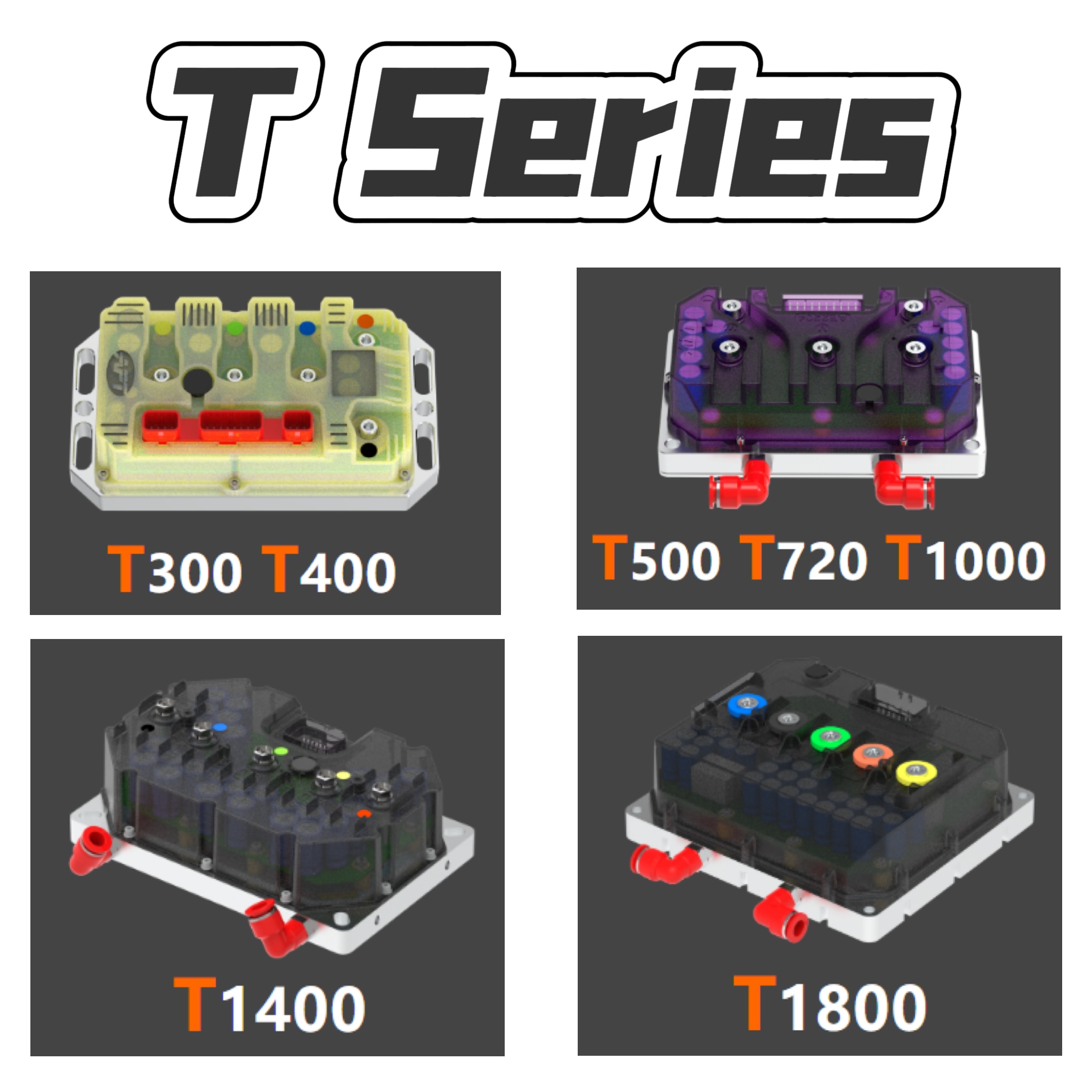
For coordinated multi-axis systems, distributed clock synchronization is the critical firmware feature. EtherCAT's distributed clocks mechanism synchronizes all slave nodes to within 1 microsecond of each other—a prerequisite for electronic gearing, cam profiling, and other synchronized motion functions. Implementing this correctly requires careful attention to propagation delay compensation and clock drift correction in the slave firmware. High-performance T-series motor controllers incorporate the processing architecture necessary to sustain tight current-loop update rates alongside network communication handling—a balance that entry-level controller designs often compromise.
Beyond pure drive controllers, system-level communication integration extends to supervisory units. Vehicle control units with integrated network communication aggregate drive data from multiple motor controllers, manage system-level state machines, and provide the upstream Ethernet gateway for telematics and remote diagnostics—a function that grows more important as fleets and industrial equipment move toward predictive maintenance models. For lighter EV and e-bike applications, electric bike and light EV motor controllers increasingly incorporate Bluetooth and CAN interfaces as the communication layer, serving as the bridge between simplified user interfaces and the underlying motor drive loop.
Selecting the Right Protocol for Your Motor Control Application
Protocol selection rarely comes down to a single factor. Six questions cover the practical decision space for most motor control system designs:
- What cycle time does the motion application require? Multi-axis servo coordination typically demands cycle times below 1 millisecond—pointing to EtherCAT or PROFINET IRT. Single-axis variable speed drives in process equipment generally run comfortably at 5–10 millisecond update rates, where EtherNet/IP or PROFINET RT perform adequately.
- What PLC or motion controller is already in the system? This is often the decisive factor. Siemens S7 controllers favor PROFINET; Rockwell/Allen-Bradley systems are built around EtherNet/IP; Beckhoff and Omron motion platforms standardize on EtherCAT. Crossing protocol boundaries is possible through gateways, but adds latency and complexity that erodes the performance advantages of the native protocol.
- How many drive axes will the network support? EtherCAT's theoretical node limit of 65,535 devices on a single network far exceeds any realistic installation, but its daisy-chain topology does mean that adding nodes lengthens the frame traversal time slightly. For very large installations with hundreds of distributed I/O points, PROFINET's switch-based star topology may offer more flexible physical layout.
- Is functional safety required at the network layer? Both EtherCAT (via FSoE, Functional Safety over EtherCAT) and PROFINET (via PROFIsafe) support IEC 61508-compliant safety communication over the same cable infrastructure as standard process data. EtherNet/IP supports CIP Safety for equivalent applications. If SIL 2 or SIL 3 safe torque-off or safe speed functions are required, confirm that the motor controller's safety firmware is certified for the chosen protocol's safety extension.
- What are the infrastructure and maintenance constraints? EtherCAT's elimination of managed switches simplifies cabinet design and reduces failure points. PROFINET and EtherNet/IP leverage standard IT switch infrastructure that plant maintenance teams may already manage and stock spare parts for—a practical advantage in facilities without dedicated automation network expertise.
- How does the controller pair with the target motor? Communication protocol and motor matching are interdependent: a controller optimized for high-bandwidth network communication must also sustain the current loop update rate the motor's electrical time constant demands. Reviewing motor controller and motor pairing guidance before committing to a controller-protocol combination ensures that the network interface specification does not outpace the underlying drive performance the motor can actually use.
The bottom line for procurement and engineering teams: the correct protocol is the one that matches the PLC ecosystem, meets the motion cycle time requirement, and fits the installation topology—in that order. Optimizing for raw protocol speed in an application that does not need it adds cost without benefit. Underspecifying for an application that does need deterministic synchronization creates reliability problems that no amount of tuning will fully correct.
NEXT:Torque Motor Controller: Types, Control Methods & Selection Guide
Interested in cooperation or have questions?
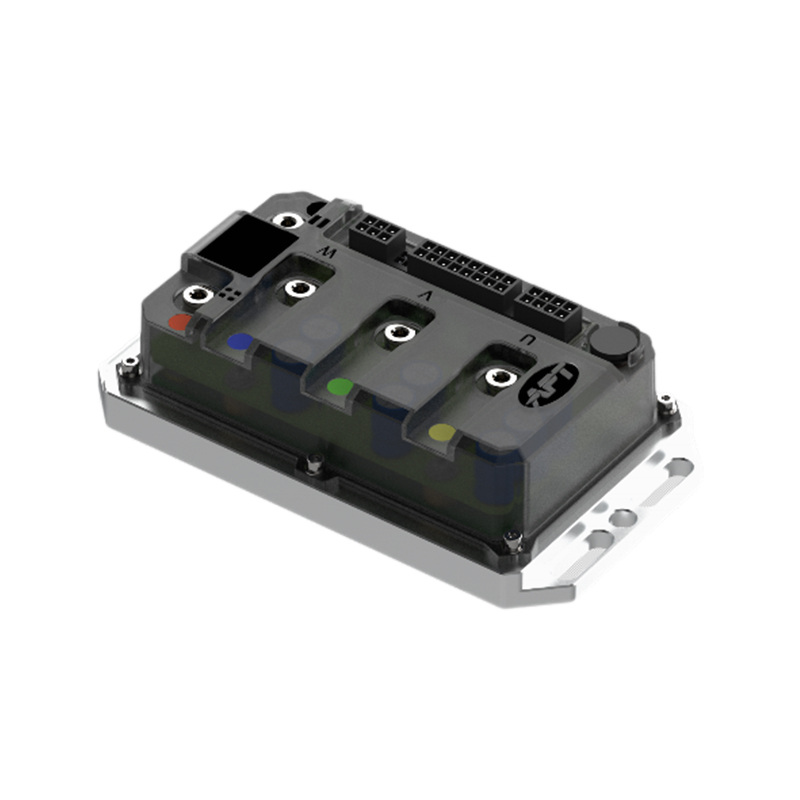
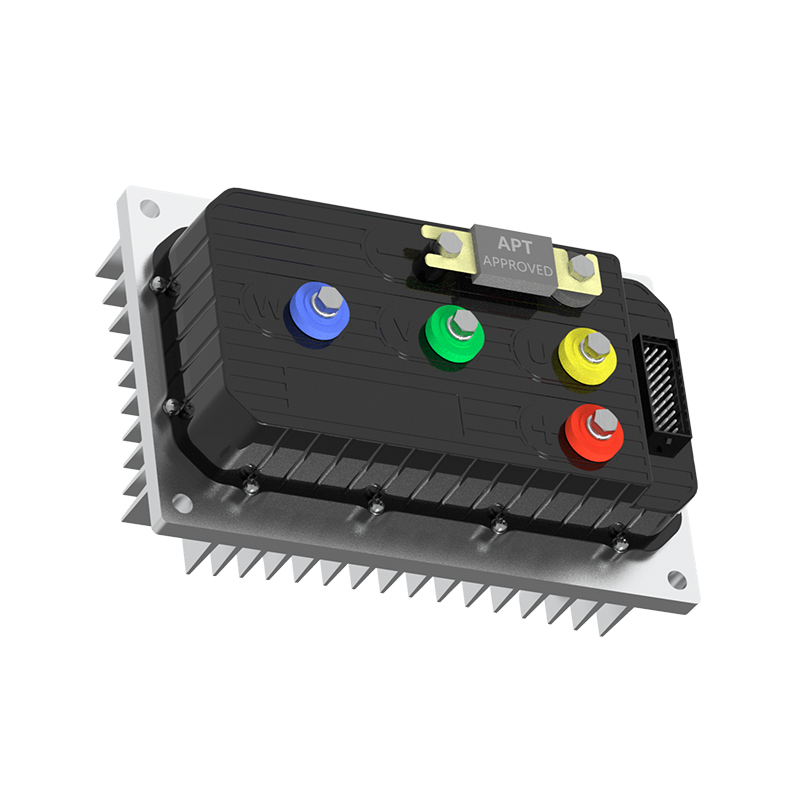
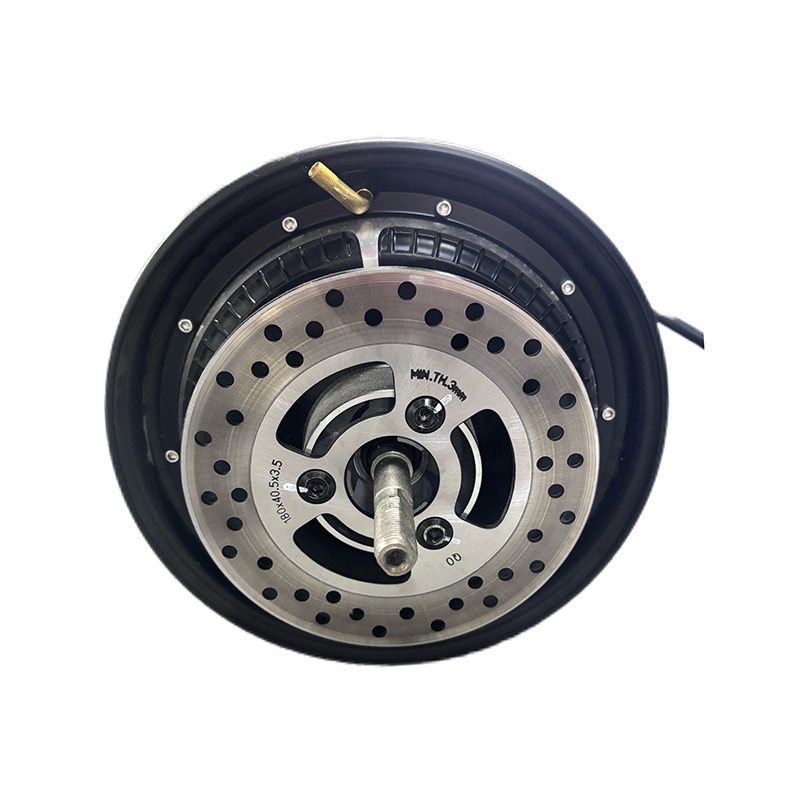
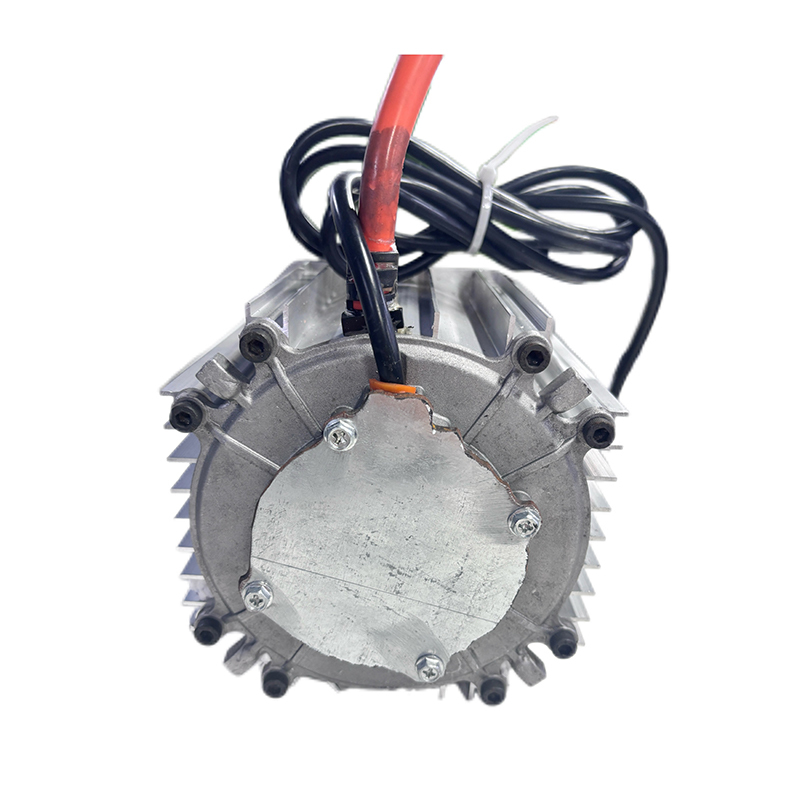

As Custom Permanent Magnet Synchronous Motor Controllers Manufacturers and Permanent Magnet Motor Controllers Suppliers in China, Focusing on the drive control of permanent magnet synchronous motors, we provide a safe and sufficient power source for the electrification of travel vehicles.
- [email protected]
- +86-170 9191 9800
- Room 123A, No. 1000 Ziyue Road, Minhang District, Shanghai, China
Copyright © Shanghai APT Power Technology Co., Ltd.All rights reserved

