 English
 Español
 عربى
عربى
CANopen Motor Controller: Protocol, CiA 402 Standard & Selection Guide
Content
CANopen Gains Ground in Industrial Motor Control
Across factory floors, autonomous mobile robots, and electric vehicle platforms, one communication standard keeps showing up: CANopen. Once considered niche, CANopen motor controllers have become a mainstream choice for engineers who need deterministic, multi-axis control without the complexity of proprietary protocols. The shift is quiet but significant—and it's accelerating.
The reason isn't hard to identify. Industrial systems are growing more interconnected, and the demand for plug-and-play interoperability between drives, sensors, and PLCs has never been higher. CANopen addresses this need directly by defining not just how data travels, but what it means and how devices should behave. For system designers, that distinction is everything.
APT Motor's range of brushless DC motor controllers for industrial B2B applications is built around exactly these demands—offering the responsiveness and configurability that CANopen-ready systems require.
What Sets CANopen Apart from Standard CAN
CAN (Controller Area Network) is the physical and data link layer—it defines the electrical signals and frame structure for transmitting raw data over a two-wire twisted pair bus. CANopen is a higher-layer protocol that runs on top of CAN. It defines what the data means, how devices are configured, and how multiple nodes coordinate during operation.
This layered architecture gives CANopen its core advantage in motor control: structured, meaningful communication that doesn't require custom firmware on every device. Instead of writing bespoke communication logic for each drive, engineers interact with a standardized Object Dictionary (OD)—a master registry of every parameter on the device, from target velocity to fault status. Access those parameters via SDO (Service Data Objects) for configuration, or via PDO (Process Data Objects) for high-speed, cyclic real-time data exchange.
NMT (Network Management) handles node states—initializing, pre-operational, and operational—giving the host controller clean authority over the entire drive network. The result is a system where adding or swapping a drive doesn't require rearchitecting the communication stack. For more on how software layers are reshaping drive integration, see how software is reshaping modern motor control.
CiA 402: The Drive Profile That Changed the Game
If CANopen is the language, CiA 402 is the grammar specifically written for motor drives. Published by CAN in Automation (CiA), this device profile standardizes the functional behavior of servo drives, frequency inverters, and stepper motor controllers—defining the state machine, control modes, and parameter objects every compliant drive must implement. The practical impact: a drive from one manufacturer can slot into a system originally built around a different brand, with minimal software changes.
According to the official CiA 402 specification from CAN in Automation, the profile covers position, velocity, and torque control modes—each with defined control-word and status-word mappings—and has been partly standardized under IEC 61800-7. That international recognition isn't cosmetic; it signals to procurement teams and system integrators that CiA 402-compliant drives carry a level of specification rigor comparable to IEC standards.
| Feature | CiA 402-Compliant Controller | Non-Standard Controller |
|---|---|---|
| Control Modes | Standardized (Position, Velocity, Torque, Homing) | Vendor-specific, varies by model |
| State Machine | Defined FSA with control-word / status-word | Custom or undocumented behavior |
| Interoperability | High — swap between brands with minimal code change | Low — tight coupling to vendor SDK |
| Integration Effort | Reduced — standardized Object Dictionary | High — custom parameter mapping required |
| Commissioning Tools | Compatible with standard CANopen tools | Often requires proprietary software |
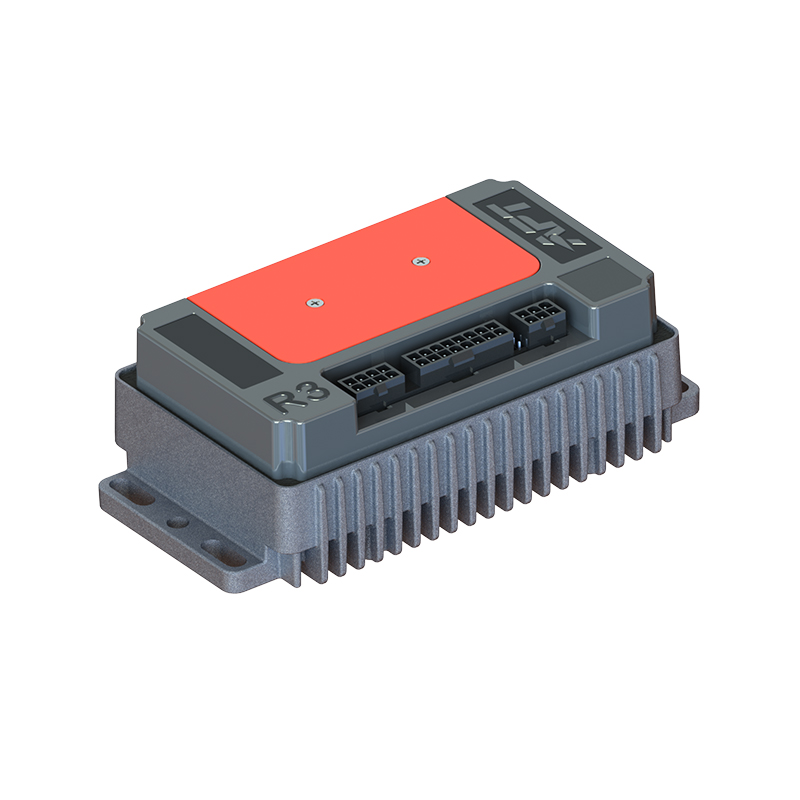
The fast-response BLDC motor controller for real-time drive systems exemplifies the kind of controller architecture that benefits most from CiA 402's state machine: deterministic transitions between modes matter enormously when a delayed control-word response can mean a positioning error or safety fault.
Where CANopen Motor Controllers Are Being Deployed
The application map for CANopen motor controllers has expanded well beyond classical CNC machinery. Autonomous mobile robots (AMRs) and automated guided vehicles (AGVs) rely on CANopen to synchronize multiple drive axes with millisecond-level coordination—essential when a warehouse robot needs to navigate, brake, and reroute in real time. The protocol's low latency and fault-detection capabilities make it a natural fit.
Collaborative robots—cobots—represent another high-growth area. Joint controllers in a six-axis cobot arm often communicate over CANopen, where the NMT state machine gives the safety PLC direct authority to halt motion across all axes simultaneously. This is not a workaround; it's the design intent of the protocol.
Electric special-purpose vehicles, including airport ground support equipment and industrial tugs, increasingly specify CANopen drives because CiA 447 extends the standard specifically for these platforms. And in medical device manufacturing, where process repeatability is non-negotiable, CANopen's deterministic PDO timing provides the audit trail and repeatability that validation teams require.
What to Look for in a CANopen Motor Controller
Not every controller labeled "CANopen-compatible" offers the same depth of implementation. When evaluating options, start with the control mode coverage: a genuine CiA 402-compliant controller should support at minimum Profile Position, Profile Velocity, and Homing modes. Torque control (current mode) is critical for force-sensitive applications like robotic grippers or press tooling.
Real-time responsiveness is the next filter. PDO cycle times in the sub-millisecond range are expected in precision positioning systems; verify the controller's maximum PDO update rate and whether it supports SYNC-triggered or event-driven PDO transmission. An enclosure rating of IP65 or higher matters in dusty or wet industrial environments—IP67 if the application involves washdown.
Voltage range and peak current handling determine what motors the controller can actually drive. A controller rated for 24–48 VDC nominal with ±10% tolerance gives meaningful headroom in battery-powered mobile platforms. For multi-axis deployments, check the node address range and whether the controller supports LSS (Layer Setting Services) for automated address assignment on startup.
The high-stability brushless DC motor controller addresses exactly these concerns—designed for continuous-duty applications where thermal management and signal integrity over long CAN bus runs are as important as raw performance. Equally relevant is the high-efficiency BLDC controller for precision applications, which targets systems where power consumption and positioning accuracy share equal weight in the design brief.
APT Motor Controllers Built for CANopen-Ready Systems
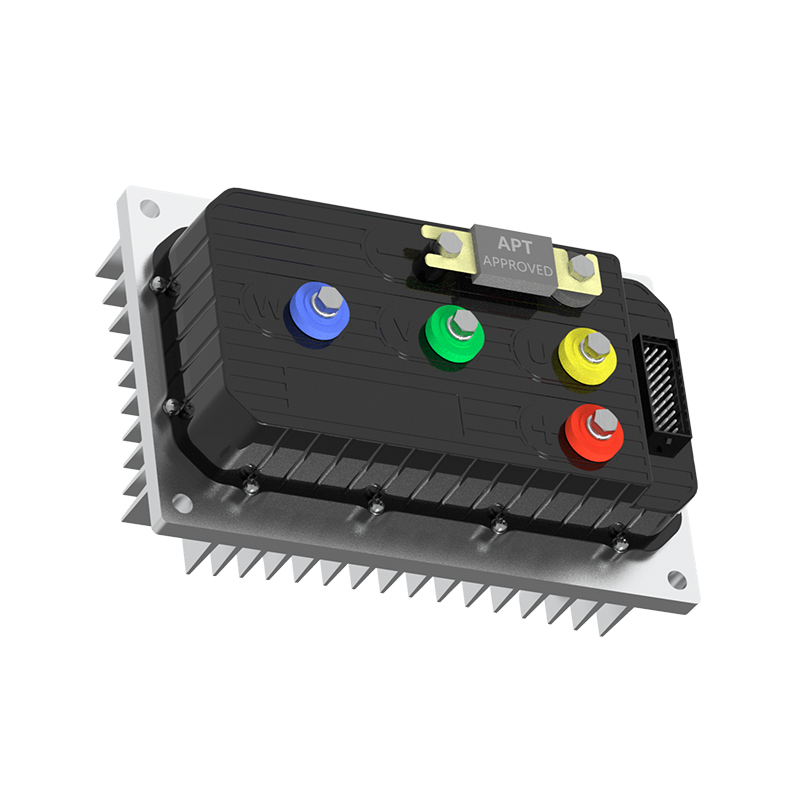
APT Motor designs brushless DC motor controllers with the demands of networked industrial systems in mind. The T-series high-performance motor controller delivers the combination of wide voltage tolerance, high-frequency PWM control, and robust fault handling that CANopen network architects look for when specifying drives for multi-axis deployments.
Pairing the right controller to the right motor is as consequential as the protocol itself. A mismatch in winding inductance, back-EMF constant, or thermal class between the controller and motor will degrade positioning accuracy and shorten drive life regardless of how well the CANopen layer is configured. APT's controller and motor pairing recommendations provide application-specific guidance to close that gap before commissioning begins.
For teams building complete drive assemblies, the supporting accessories and connectivity equipment for motor systems rounds out the hardware stack—connectors, cables, and mounting hardware selected to maintain signal integrity across the CAN bus at full network length.
As CANopen adoption continues to spread from traditional factory automation into mobile robotics, EV platforms, and medical equipment, the bar for what a capable motor controller must deliver keeps rising. Selecting hardware that meets CiA 402 compliance requirements today means fewer integration headaches and a cleaner upgrade path as system requirements evolve.
NEXT:Ethernet Communication Motor Controllers: Protocols, Integration & Selection
Interested in cooperation or have questions?


As Custom Permanent Magnet Synchronous Motor Controllers Manufacturers and Permanent Magnet Motor Controllers Suppliers in China, Focusing on the drive control of permanent magnet synchronous motors, we provide a safe and sufficient power source for the electrification of travel vehicles.
- [email protected]
- +86-170 9191 9800
- Room 123A, No. 1000 Ziyue Road, Minhang District, Shanghai, China
Copyright © Shanghai APT Power Technology Co., Ltd.All rights reserved

