 English
 Español
 عربى
عربى
Hub Motor: Types, Specs, Applications & Buying Guide
Content
What Is a Hub Motor and How Does It Work?
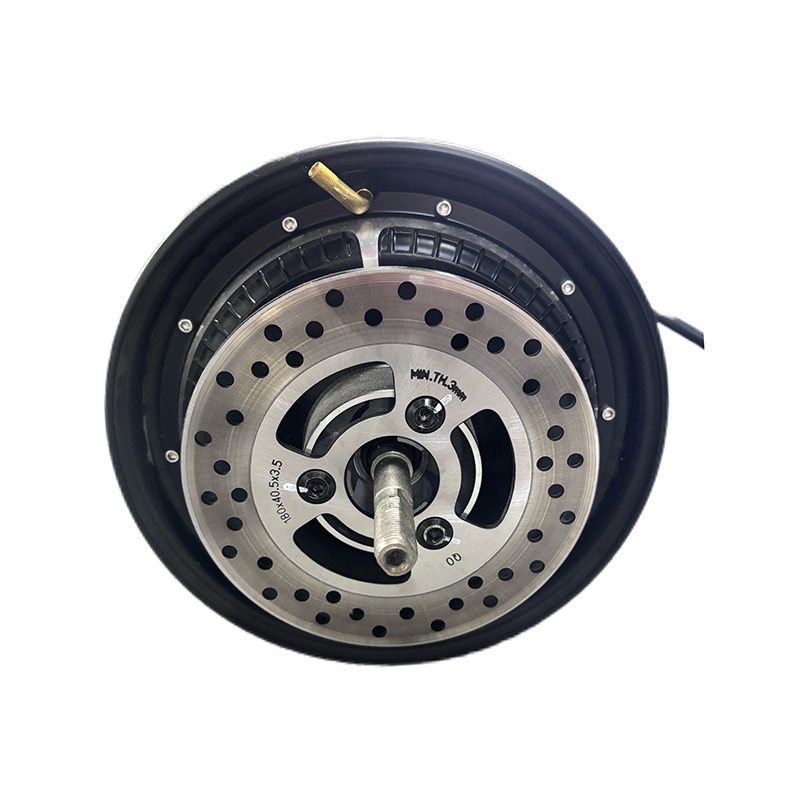
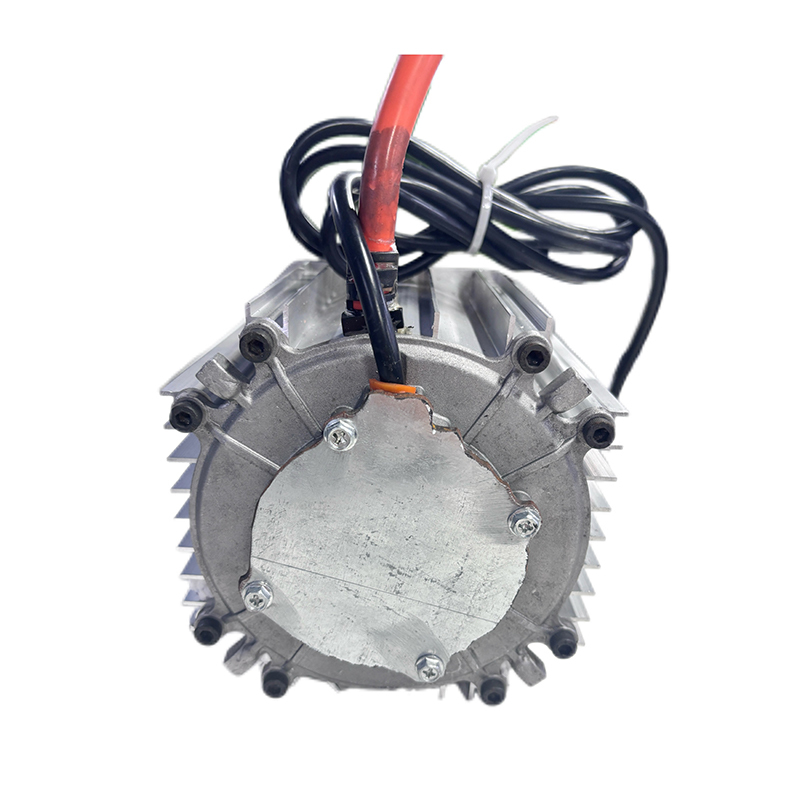
A hub motor is an electric motor integrated directly into the wheel hub of a vehicle, eliminating the need for a central motor, transmission, differential, driveshaft, and associated mechanical linkages by placing the drive unit at the point of propulsion itself. The wheel is the motor — or more precisely, the motor's rotor is the wheel hub, and the stator is fixed to the vehicle's axle or fork. This fundamental architecture represents one of the most elegant simplifications in electric vehicle engineering, collapsing multiple drivetrain components into a single integrated assembly.
In a typical hub motor, the stator — carrying wound copper coils — is fixed and stationary, mounted on the axle. The rotor — carrying permanent magnets or in some designs the windings — surrounds the stator and rotates with the wheel. Electrical current supplied to the stator coils generates a rotating magnetic field that interacts with the rotor magnets to produce torque, driving wheel rotation. Most modern hub motors are brushless DC (BLDC) or permanent magnet synchronous motors (PMSM), using electronic commutation through a motor controller rather than physical brushes, achieving efficiencies of 85–95% while eliminating the wear and maintenance associated with brush commutation.
Hub motors are produced in two primary configurations based on whether the motor output shaft rotates at wheel speed directly or through a planetary reduction gear. Direct-drive hub motors rotate at wheel speed with no internal gearing — smooth, silent, and mechanically simple, with the ability to regenerate braking energy efficiently. Geared hub motors incorporate a small internal planetary reduction (typically 3:1 to 5:1) that allows the motor to spin at higher, more efficient speeds while the wheel turns at normal velocity — enabling smaller, lighter motors for equivalent torque output at the cost of some added mechanical complexity and slight efficiency reduction under regeneration.
Hub Motor Types and Configurations
Hub motors span a wide range of power levels, sizes, and design configurations, each optimized for different vehicle classes and performance requirements. Understanding the distinctions between these configurations is essential for matching hub motor specifications to application demands.
Direct-Drive Hub Motors
Direct-drive hub motors contain no internal reduction gearing — the motor rotor is coupled directly to the wheel. This architecture offers several significant advantages: near-silent operation, high regenerative braking efficiency (the large-diameter stator acts as an effective generator when braking), no gear wear or lubricant requirements, and exceptional reliability due to the absence of moving parts beyond the rotor bearings. The primary limitation is the requirement for a large motor diameter to generate sufficient torque at the low rotational speeds characteristic of wheel rotation — a large-diameter, high pole-count motor produces more torque per amp at low speed than a small-diameter equivalent, which explains why direct-drive hub motors are typically physically larger and heavier than geared alternatives of equivalent power.
Direct-drive hub motors are the dominant specification in high-performance electric bicycle applications above 1,000W, cargo e-bikes, electric scooters, and light electric vehicles where their regenerative efficiency advantage and long service life justify the weight premium over geared alternatives.
Geared Hub Motors
Geared hub motors use a high-speed inner motor connected to the wheel through a planetary reduction gear train, allowing the motor to operate at its efficiency optimum speed (typically 400–600 RPM for the wheel, achieved through 3:1–5:1 reduction from a motor operating at 1,500–3,000 RPM). The gear reduction enables significantly smaller motor dimensions and lower weight for equivalent torque output — a 250W geared hub motor for an e-bike application typically weighs 2.5–3.5 kg versus 4–6 kg for a direct-drive equivalent. The planetary gears in quality geared hub motors are typically machined from nylon or sintered steel, with nylon gears offering quieter operation and steel gears providing higher torque capacity and longer life in heavy-duty applications. One-way roller clutches (freewheeling mechanisms) in geared hub motors allow the wheel to spin freely when the motor is unpowered — a significant advantage for human-powered efficiency when e-bike assistance is not engaged, as direct-drive motors impose magnetic drag when coasting.
Outer Rotor vs. Inner Rotor Configurations
In the outer rotor (outrunner) configuration — used in the majority of hub motors — the rotor shell carrying permanent magnets rotates around the fixed stator, with the rotor directly connected to the wheel rim. This configuration maximizes torque arm length (rotor diameter equals available torque arm) and is well-suited to direct-drive applications. Inner rotor configurations, where the rotor spins inside the stator, are used in some high-speed geared hub motor designs where the compact rotor enables higher rotational speeds and the gear reduction provides the necessary torque multiplication.
Mid-Drive vs. Hub Motor Architecture
While not a hub motor configuration per se, the comparison between hub motor and mid-drive (centrally mounted) architectures is a critical decision point for vehicle designers and buyers. Mid-drive motors — mounted at the bottom bracket of an e-bike or at the drivetrain center of a vehicle — benefit from the vehicle's existing gear transmission, enabling the motor to operate in its efficiency optimum speed range across varying load conditions. Hub motors, by contrast, are locked to wheel speed, which means they operate outside their efficiency optimum under high-torque, low-speed conditions such as hill climbing from rest — a fundamental physical constraint that mid-drive architectures avoid. Hub motors compensate with lower system complexity, lower cost, better waterproofing (no open mechanical connections to the drivetrain), and easier wheel removal for flat tire service in non-hub-motor-wheel configurations.
Key Technical Specifications
| Specification | E-Bike (Geared) | E-Scooter / Light EV | Electric Car / Heavy EV |
|---|---|---|---|
| Rated Power | 250–750W | 1–5 kW | 20–100+ kW per wheel |
| Peak Torque | 30–60 Nm | 80–300 Nm | 500–2,000+ Nm |
| Motor Efficiency | 80–88% | 85–92% | 92–97% |
| Motor Weight | 2.5–4 kg | 5–15 kg | 30–80 kg |
| Voltage Range | 24–60V | 48–96V | 300–800V |
| IP Rating | IP54–IP65 | IP65–IP67 | IP67–IP69K |
Applications Across Vehicle Categories
Hub motors have achieved commercial dominance in specific vehicle segments while remaining developmental or niche in others. The pattern of adoption reflects the technology's genuine advantages and limitations when matched against the performance requirements of each vehicle category.
Electric Bicycles and Cargo E-Bikes
E-bikes represent the largest global hub motor market by unit volume, with over 40 million e-bikes sold annually worldwide — the majority powered by hub motors. Rear hub motors are the dominant configuration in consumer e-bikes, providing pedal-assist and throttle drive modes while maintaining the simplicity that enables low retail prices and minimal service requirements. Cargo e-bikes — carrying payloads of 100–300 kg for last-mile delivery, family transport, and commercial logistics — increasingly specify high-torque direct-drive rear hub motors or powerful geared hub motors in the 500–1,500W range that can sustain heavy loads on grade without thermal overload.
Electric Scooters and Motorcycles
Electric scooters — from the shared micro-mobility fleets deployed in cities globally to the 125cc-equivalent personal commuter scooters dominant in Asian markets — overwhelmingly use single rear hub motors in the 1–5 kW range. The hub motor architecture is particularly well-suited to scooters because the step-through frame design provides no natural location for a mid-mounted motor, and the low center of gravity of hub motors contributes positively to handling. High-performance electric motorcycles are beginning to adopt hub motor configurations in rear wheels for applications where packaging simplicity and reduced unsprung mass trade-off analysis favors the in-wheel architecture over chain or belt drives from central motors.
Electric Wheelchairs and Mobility Aids
Hub motors are the universal drivetrain solution for powered wheelchairs, mobility scooters, and personal transport devices for users with reduced mobility. The architecture's compact packaging, low noise, and independent wheel control — enabling differential steering by varying the speed and direction of left and right drive wheels — makes it ideally suited to applications where maneuverability in confined indoor spaces is paramount. Torque sensing and smooth low-speed control at sub-walking speeds are critical performance requirements that distinguish mobility aid hub motor controllers from the simpler speed-control-focused controllers used in recreational e-bikes.
Automotive Hub Motors: Current Status and Challenges
Despite decades of development interest and numerous prototype demonstrations, hub motors have not yet achieved significant penetration in passenger car and commercial vehicle markets — a contrast with their dominance in lighter vehicle categories. The primary engineering challenges that have constrained automotive hub motor adoption are unsprung mass, thermal management, and structural integration complexity. Unsprung mass — the mass of components not supported by the suspension springs, including wheels, brakes, and (in a hub motor vehicle) the motors themselves — directly degrades ride quality and road-holding ability. A hub motor adding 20–30 kg to each driven wheel significantly increases unsprung mass compared to a central motor arrangement, requiring suspension redesign to maintain acceptable ride and handling. Several automotive OEMs and technology suppliers — including Protean Electric, Elaphe, and NovaDrive — have developed automotive-grade hub motor systems addressing these challenges through mass reduction and integrated active suspension designs, with commercial deployments beginning to emerge in bus and specialty vehicle applications where unsprung mass sensitivity is lower than in passenger cars.
Motor Controller Integration and Regenerative Braking
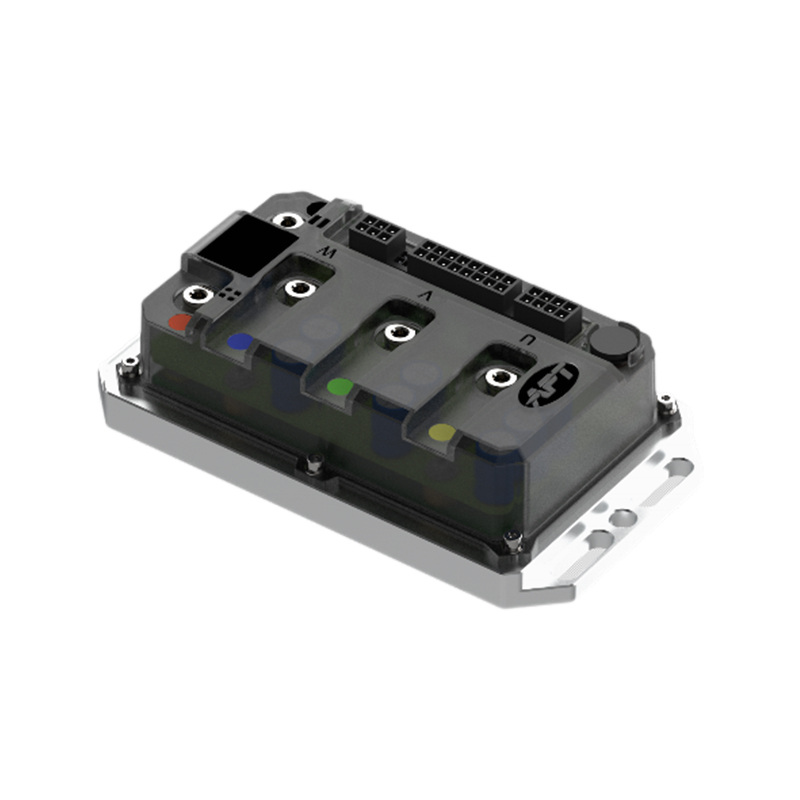
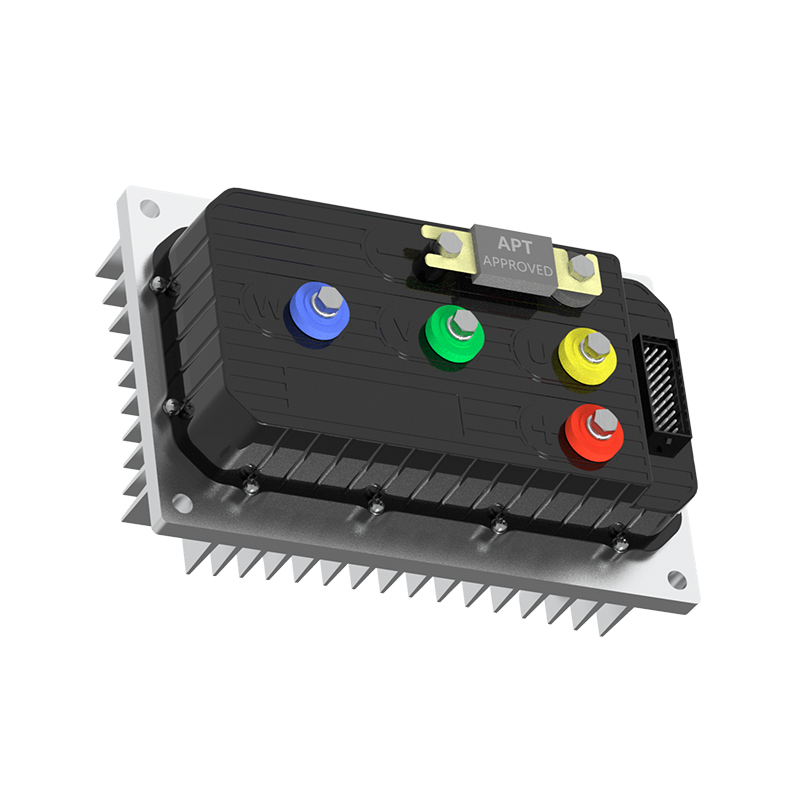
A hub motor system's performance is determined as much by its controller as by the motor itself. The motor controller — a power electronics unit that converts DC battery voltage into the three-phase AC waveforms required to drive the brushless motor — governs torque output, speed, regenerative braking, thermal protection, and communication with vehicle management systems.
Field-oriented control (FOC), also known as vector control, is the current standard algorithm for high-performance hub motor controllers. FOC decomposes motor current into torque-producing and flux-producing components, enabling independent optimization of each — resulting in smoother low-speed torque delivery, higher peak efficiency, reduced motor heating at partial loads, and better regenerative braking performance compared to simpler sinusoidal or trapezoidal commutation schemes. For e-bike applications, FOC controllers with torque sensor (strain gauge pedal sensor) integration produce the natural, responsive pedal-assist feel that distinguishes premium e-bikes from entry-level products using simpler cadence (rotation speed) sensors.
Regenerative braking — recovering kinetic energy during deceleration by operating the motor as a generator and returning current to the battery — is more effective in direct-drive hub motors than in geared hub motors due to the absence of one-way clutches (which prevent back-driving through the gear train). In direct-drive systems, regenerative braking efficiency of 60–75% of braking energy recovery is achievable under moderate deceleration, contributing meaningfully to system range — particularly in urban stop-start driving cycles where braking is frequent. At the vehicle system level, effective regenerative braking can extend e-bike range by 5–15% in urban environments and significantly more in hilly terrain where frequent downhill braking events provide high regeneration opportunities.
Sourcing, Quality Standards, and Market Landscape
The global hub motor supply chain is dominated by Chinese manufacturers — concentrated in Zhejiang, Guangdong, and Jiangsu provinces — who collectively produce the substantial majority of e-bike and light EV hub motors sold worldwide. This concentration reflects China's vertically integrated supply chain for permanent magnets (rare earth materials), copper windings, steel laminations, and power electronics that enables cost-competitive production at scale unavailable elsewhere.
Leading Chinese hub motor manufacturers — including Bafang, Shengyi, Tongsheng, and Heinzmann — supply both branded products and OEM components to e-bike manufacturers globally. European and North American manufacturers including TM4 (now Dana TM4), Elaphe, and Protean Electric focus on higher-power automotive-grade hub motor systems where the quality, liability, and performance requirements justify the significant price premium over Asian consumer-grade products.
Key quality criteria for hub motor evaluation include magnet grade and retention (N35–N52 NdFeB magnets, with resin potting or mechanical retention to prevent magnet debonding under vibration), winding quality (automated winding with consistent turn count and insulation integrity testing), bearing specification and preload (angular contact or deep groove bearings sized for the combined radial and axial loads of the application), and waterproofing integrity (IP rating verification through actual immersion testing rather than design calculation alone). For regulated markets, CE marking (EU), UL certification (US), and EN 15194 compliance (EU e-bike standard) are required depending on the vehicle category and market destination.
NEXT:Brushless DC Motor Controllers: How They Work & Selection
Interested in cooperation or have questions?


As Custom Permanent Magnet Synchronous Motor Controllers Manufacturers and Permanent Magnet Motor Controllers Suppliers in China, Focusing on the drive control of permanent magnet synchronous motors, we provide a safe and sufficient power source for the electrification of travel vehicles.
- [email protected]
- +86-170 9191 9800
- Room 123A, No. 1000 Ziyue Road, Minhang District, Shanghai, China
Copyright © Shanghai APT Power Technology Co., Ltd.All rights reserved

