 English
 Español
 عربى
عربى
Field Weakening Explained: How Motor Controllers Push Speed Beyond Base Rating
An electric motorcycle running at full throttle reaches its rated speed, and the throttle suddenly feels dead. The motor can still spin faster, but the controller stops delivering more current. To push beyond that point, the controller must deliberately weaken the magnetic field inside the motor. That technique is field weakening, also called flux weakening, and it is one of the most important behaviors to understand when you are selecting a motor controller for a vehicle that needs genuine top speed.
Content
What Field Weakening Actually Does
Field weakening lets a motor exceed its base speed by reducing the magnetic flux in the air gap. In a permanent magnet synchronous motor, the rotor magnets produce a back-EMF that grows with speed. When that back-EMF approaches the DC bus voltage, the controller can no longer push current into the windings, so acceleration stops. The conclusion is simple: field weakening exists because the bus voltage is finite, while the motor wants to spin faster than that voltage allows.
The standard solution is to command a negative d-axis current that opposes the rotor flux. That current weakens the effective field, lowers the back-EMF, and leaves voltage headroom for more speed. The price is paid immediately in torque. Below base speed the motor produces constant torque, while above base speed it behaves roughly as a constant power source, so available torque falls as speed climbs.
| Parameter | Constant torque region, below base speed | Field weakening region, above base speed |
|---|---|---|
| Torque | Rated torque available | Torque falls as speed rises |
| Output power | Rises with speed | Roughly constant |
| Back-EMF | Below bus voltage | Held in check by d-axis current |
| d-axis current | Near zero | Negative |
| Efficiency | Highest near base speed | Lower, with more copper loss |
How a Modern Controller Implements Field Weakening
High-performance controllers implement field weakening with field-oriented control, usually called FOC. The firmware continuously resolves stator current into two perpendicular components: q-axis current, which creates torque, and d-axis current, which is normally held near zero below base speed. To enter field weakening, the firmware intentionally sets a negative d-axis current to cancel part of the rotor field.
A controller that manages this transition smoothly is very different from one that simply clamps phase current at a high duty cycle. FOC keeps the speed extension continuous and predictable, with no sudden loss of response at the base speed boundary. That is why processor bandwidth, gate driver quality, and software tuning matter as much as the silicon inside the power stage. A platform designed for sustained high-speed operation, such as the T-series high-performance motor controller, is rated with the current-loop performance needed to hold regulation above base speed.
 Permanent Magnet Synchronous Motor Drive Control PlatformThis motor controller platform is designed for sustained high-speed operation, with current-loop performance needed to maintain regulation above base speed, making it relevant for applications requiring wide speed range through field weakening.View Product →
Why Field Weakening Matters on a Real Vehicle
Without field weakening, top speed is hard-limited by battery voltage and the motor's back-EMF constant. The only alternatives are a higher-voltage battery, a motor with a lower back-EMF constant, or a larger wheel, and each of those options hurts acceleration, packaging, or cost. Field weakening lets one motor cover a much wider speed range, so designers can keep gearing low enough for strong launch torque and still reach a reasonable cruising speed.
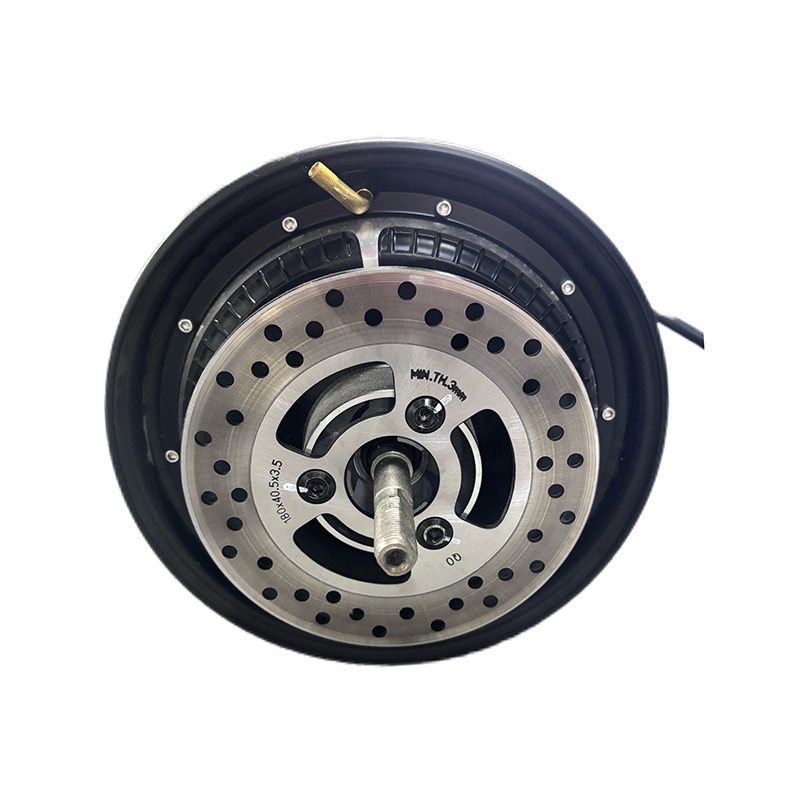
A practical example: a 4 kW wheel hub motor with a 3000 rpm base speed on an electric motorcycle may need roughly 20 percent field weakening to move from 55 km/h to 70 km/h. That is a realistic operating range for a production controller, and it changes the riding experience more than upgrading the battery.
The same reasoning applies to electric ATVs, UTVs, robotic chassis, and e-outboard motors, where the ability to respond quickly around base speed determines how natural the vehicle feels to the rider or operator.
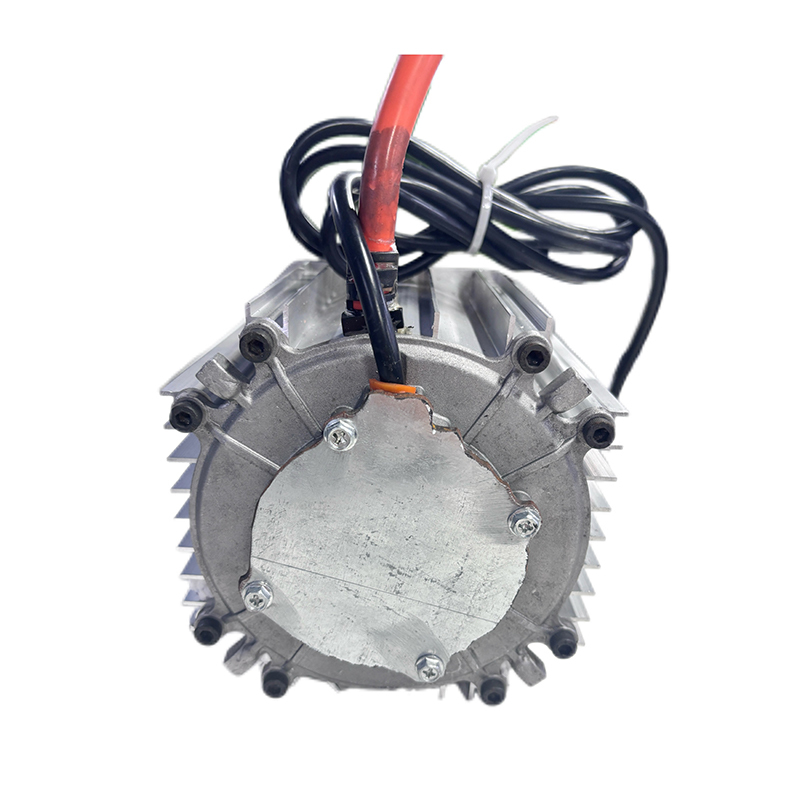 R5 Fast-Response Brushless DC Motor ControllerThis controller emphasizes fast response around base speed, which directly affects how natural an electric ATV, UTV, robotic chassis, or outboard motor feels to the operator, supporting quick throttle and load changes.View Product →
The Efficiency and Heat Trade-Offs
Field weakening is not free power. The demagnetizing d-axis current produces no mechanical work but still flows through the windings and generates copper loss. Efficiency in the field weakening region is therefore lower than near base speed, and the motor runs hotter for the same output.
One common misunderstanding is that field weakening raises phase current in order to make more power. It does not. It shifts the phase angle of the current so that part of the stator field opposes the rotor magnets, which lowers the generated voltage and allows the motor to spin faster. Meanwhile the torque-producing component of current is reduced.
There is also a real risk of permanent magnet demagnetization. If the negative d-axis current is pushed too far while the magnets are hot, rotor flux can drop permanently and the motor will lose torque forever. That is why serious controllers limit d-axis current through thermal and speed-dependent maps instead of letting the user simply raise one global number.
As a rule of thumb, available torque above base speed falls roughly with one over speed. Gaining 20 percent more top speed may cost a large share of the acceleration available at the rated point, so the efficiency of the field weakening implementation directly affects vehicle range and thermal safety.
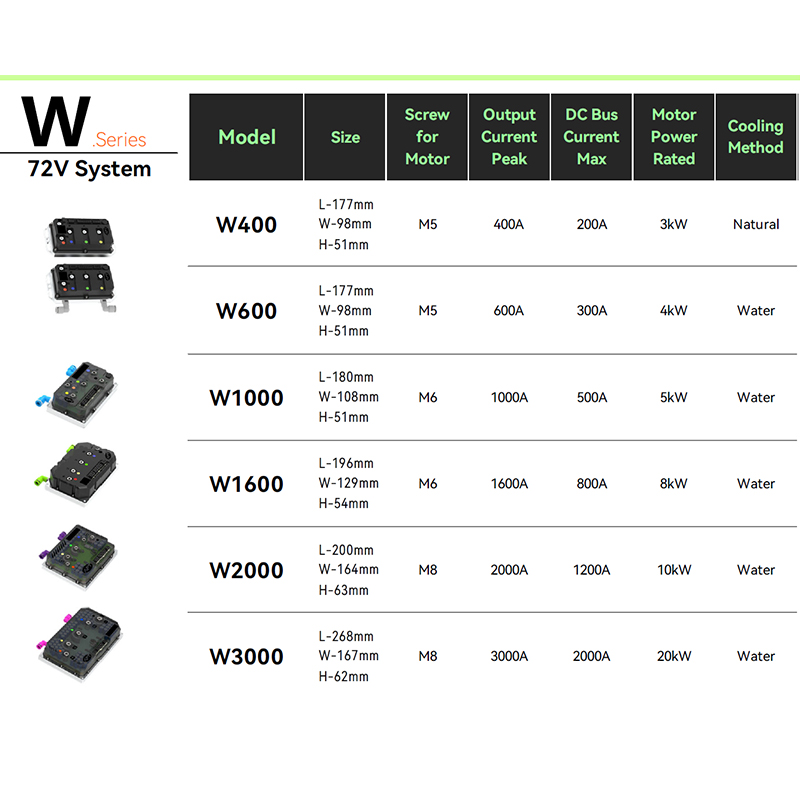 A4 High-Efficiency Brushless DC Motor ControllerGiven that field weakening reduces efficiency and increases heat, this controller's high-efficiency design matters for vehicle range and thermal safety, and buyers should verify FOC implementation, thermal limits, and tunable maps.View Product →
What to Check in a Motor Controller Before You Buy
Because field weakening is a software and power-stage function rather than a number printed on the box, buyers need to ask concrete questions. Does the controller use FOC with a declared negative d-axis current range? Are the field weakening limits thermally protected? Can the tuning maps be updated when the motor or vehicle changes?
- Field weakening range: the continuous and peak negative d-axis current should be stated in the datasheet, not hidden.
- Thermal management: sustained high-speed operation heats both the winding and the MOSFETs, so the controller needs temperature-based current derating.
- Software adjustability: top speed, torque ramp, and field weakening depth should be tunable for each application.
- Motor matching: back-EMF constant, pole count, and inductance all shape how field weakening behaves, so pairing advice matters.
These details separate a generic controller from one that is truly production ready. A motor drive supplier with in-house embedded software experience is far more likely to deliver a calibrated field weakening strategy than a reseller of fixed firmware. The role of software in modern motor control is expanding quickly, and it is worth studying before you commit to a hardware platform.
On the hardware side, high-voltage MOSFET paralleling experience matters just as much, because field weakening pushes phase current under high speed and high heat, exposing every weakness in the power stage. Working with a motor drive supplier that builds this class of product day after day reduces the risk of discovering a marginal design halfway through vehicle validation.
Field weakening is not an exotic extra anymore. It is a core function of every serious motor controller used in electric mobility, and the quality of its implementation decides how fast, how smooth, and how reliable the final vehicle feels. Look for a controller that combines mature FOC firmware with a power stage capable of surviving sustained high-speed current demand. Get that combination right, and the motor will feel faster without sacrificing durability.
NEXT:Closed Loop Motor Control: How Feedback Improves Motor Performance and Reliability
Interested in cooperation or have questions?
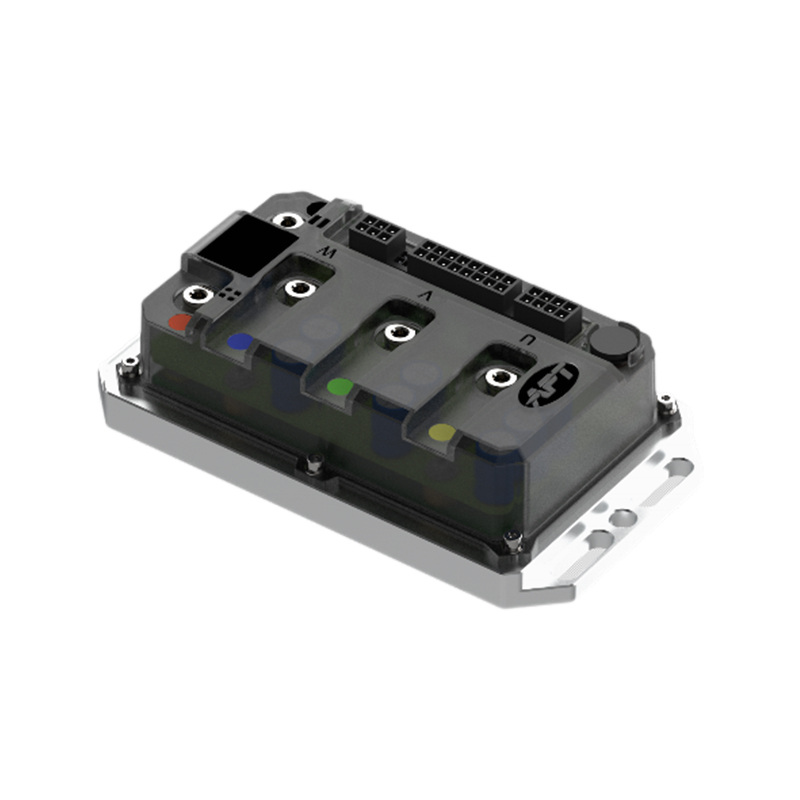
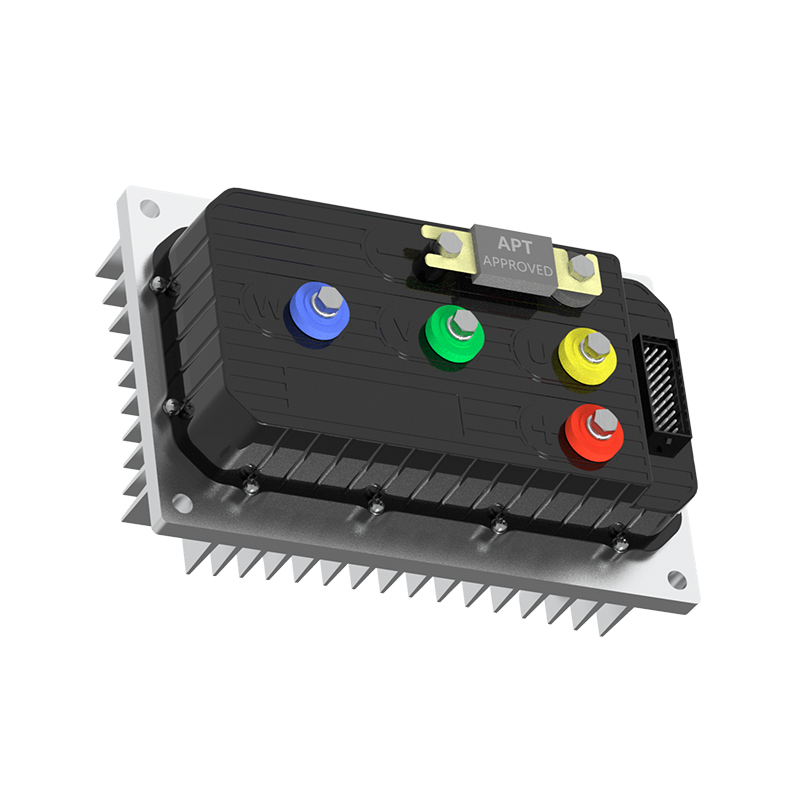



As Custom Permanent Magnet Synchronous Motor Controllers Manufacturers and Permanent Magnet Motor Controllers Suppliers in China, Focusing on the drive control of permanent magnet synchronous motors, we provide a safe and sufficient power source for the electrification of travel vehicles.
- [email protected]
- +86-170 9191 9800
- Room 123A, No. 1000 Ziyue Road, Minhang District, Shanghai, China
Copyright © Shanghai APT Power Technology Co., Ltd.All rights reserved

