 English
 Español
 عربى
عربى
Hub-Motor Guide: Types, Efficiency & E-Bike Performance
Content
The Simplicity and Reliability of Hub-Drive Systems
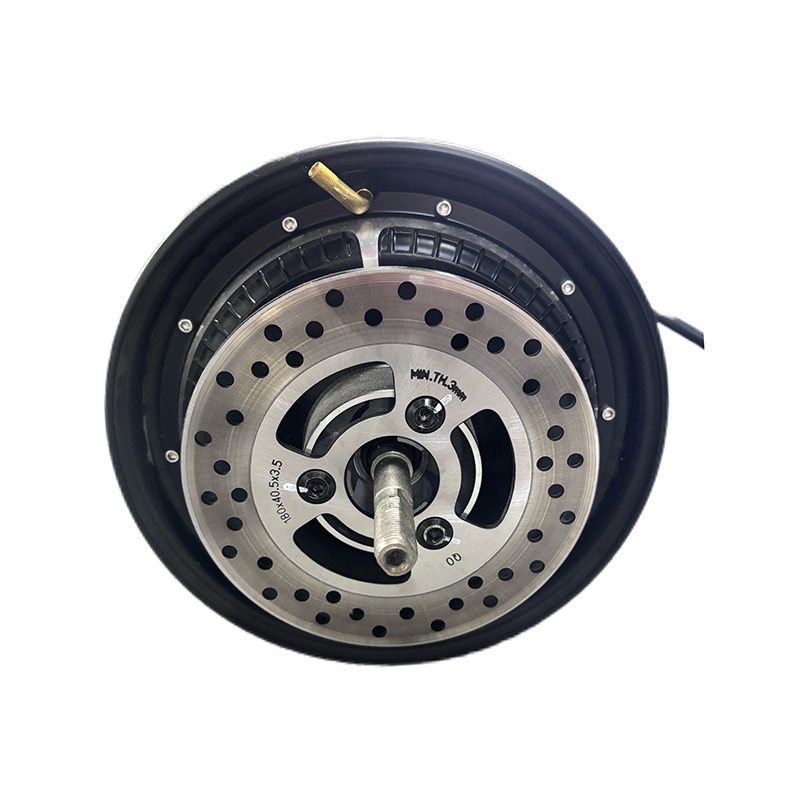
A hub-motor integrates the electric drive directly into the wheel hub, eliminating the need for chains, belts, or complex transmission systems. This design offers a streamlined, low-maintenance solution for electric bicycles, scooters, and light vehicles. By placing the motor at the point of contact with the ground, hub motors provide direct propulsion that is easy to install and highly reliable for daily commuting.
The primary advantage of hub motors is their simplicity. With fewer moving parts than mid-drive systems, they require minimal maintenance and are less prone to mechanical failure. They allow riders to use standard bicycle gears independently of the motor, providing flexibility in pedaling cadence. For urban commuters and casual riders, the quiet operation and smooth power delivery of a hub motor make it an ideal choice for navigating city streets and bike paths.
Geared vs. Direct Drive: Choosing the Right Type
Hub motors are primarily categorized into two types: geared (geared hub) and direct drive. Each type has distinct characteristics that suit different riding styles and performance requirements.
Geared Hub Motors
Geared hub motors use internal planetary gears to reduce the high RPM of the electric motor to a lower, more powerful wheel speed. This gearing allows for smaller, lighter motors that produce high torque at low speeds, making them excellent for hill climbing and acceleration. Most modern e-bikes use geared hubs because they are efficient, compact, and often include a freewheel mechanism that allows the wheel to spin freely when not powered, reducing drag.
Direct Drive Hub Motors
Direct drive motors connect the motor’s rotor directly to the wheel, meaning the wheel spins at the same speed as the motor. These units are typically larger and heavier but offer higher top speeds and greater durability due to the absence of internal gears. They are also capable of regenerative braking, which can recover small amounts of energy during deceleration. However, they can create significant resistance (cogging) when pedaling without power, making them less ideal for casual riding.
| Feature | Geared Hub Motor | Direct Drive Hub Motor |
|---|---|---|
| Weight | Light (2-3 kg) | Heavy (4-6 kg) |
| Torque | High at low speeds | Moderate, increases with speed |
| Efficiency | High in urban ranges | High at top speed |
| Maintenance | Gears may wear over time | Virtually maintenance-free |
Performance Characteristics and Efficiency
Understanding the performance profile of a hub motor helps riders set realistic expectations for range, speed, and handling. While hub motors are efficient, their placement on the wheel affects the overall dynamics of the vehicle.
Weight Distribution and Handling
Because the motor is located in the wheel, hub motors add unsprung weight to the bike. A rear hub motor can make the back end feel heavy, potentially affecting traction on loose surfaces, while a front hub motor may cause the wheel to slip under hard acceleration on wet or gravelly roads. However, for paved urban commuting, this weight distribution is generally manageable and provides a stable, planted feel at higher speeds.
Energy Efficiency and Range
Hub motors are most efficient within a specific speed range, typically between 20-30 km/h for geared units. Operating outside this range can lead to reduced efficiency and increased battery consumption. Geared hubs are generally more efficient for stop-and-go city riding due to their high torque at low speeds, while direct drive units excel in maintaining constant high speeds on flat terrain. Riders can expect a range of 40-80 km on a single charge, depending on battery capacity and riding conditions.
- Use pedal assist to extend battery life and reduce motor strain
- Maintain proper tire pressure to minimize rolling resistance
- Avoid excessive throttle use from a standstill to protect internal gears
- Choose a motor wattage (250W-750W) that matches local legal limits and terrain needs
Installation and Maintenance Considerations
One of the biggest selling points of hub motors is their ease of integration and low maintenance requirements. Whether building a custom e-bike or replacing a failed unit, the process is straightforward compared to mid-drive systems.
Ease of Installation
Hub motors can be installed on most standard bicycle frames with dropouts wide enough to accommodate the motor axle. Front hub conversions are particularly simple, requiring only basic tools and no modification to the drivetrain. Rear hub installations may require adjusting the derailleur and chain length. Many conversion kits come with pre-laced wheels, allowing users to simply swap the wheel and connect the electrical components.
Long-Term Durability
Hub motors are sealed units, protecting internal components from dust and water. Geared hubs may require occasional gear lubrication or replacement after 5,000-10,000 km of heavy use, while direct drive motors can last indefinitely with no internal wear. Regular checks of the axle nuts and electrical connections are sufficient to ensure safe operation. If a failure does occur, the entire wheel can often be replaced quickly, minimizing downtime.
- Ensure the frame dropouts are reinforced to handle motor torque
- Use torque arms on high-power motors to prevent axle rotation and damage
- Keep electrical connectors clean and dry to prevent corrosion
- Listen for unusual noises from the hub, which may indicate gear wear
In conclusion, the hub-motor remains a dominant technology in the electric mobility sector due to its cost-effectiveness, reliability, and ease of use. Whether choosing a geared hub for agile city commuting or a direct drive for high-speed cruising, riders benefit from a system that simplifies the electric driving experience. With proper selection and minimal maintenance, a hub motor provides years of efficient and enjoyable transportation.
NEXT:Pancake BLDC Motor: How It Works, Trade-Offs & Applications
Interested in cooperation or have questions?

As Custom Permanent Magnet Synchronous Motor Controllers Manufacturers and Permanent Magnet Motor Controllers Suppliers in China, Focusing on the drive control of permanent magnet synchronous motors, we provide a safe and sufficient power source for the electrification of travel vehicles.
- [email protected]
- +86-170 9191 9800
- Room 123A, No. 1000 Ziyue Road, Minhang District, Shanghai, China
Copyright © Shanghai APT Power Technology Co., Ltd.All rights reserved

