 English
 Español
 عربى
عربى
Sensorless Brushless Motor Controller: How It Works & When to Use It
Hall-effect sensors cost money, occupy space inside the motor, and add three or more wires to every connector. In industrial and consumer applications where simplicity, cost, and reliability matter, engineers have long asked: what if the controller could figure out rotor position on its own? The answer is sensorless brushless motor control—a technique that extracts rotor position information directly from the motor's electrical behavior, with no dedicated feedback hardware required.
Today, sensorless control is not a niche workaround. It powers e-bike drivetrains, industrial fans, HVAC compressors, power tools, and robotics applications across the globe. Understanding how sensorless controllers work—and where they have real limits—is essential for selecting the right drive architecture for any brushless DC application.
Content
- 1 How Sensorless Control Works: Reading Back-EMF
- 2 FOC-Based Sensorless Control: Higher Precision at Greater Complexity
- 3 The Startup Problem: Getting from Zero to Running
- 4 Sensorless vs. Hall-Effect Sensored: Choosing the Right Architecture
- 5 Where Sensorless Brushless Controllers Deliver the Most Value
- 6 What to Look for When Selecting a Sensorless Brushless Motor Controller
How Sensorless Control Works: Reading Back-EMF
Every brushless DC motor generates a voltage in its windings as the rotor spins—a phenomenon called back electromotive force, or back-EMF (BEMF). The amplitude of this voltage is proportional to rotor speed, and its phase relationship to the stator current directly encodes rotor position. A sensorless controller monitors the BEMF waveform across the motor's non-energized phase windings to determine where the rotor is at any given moment.
The most widely used method is zero-crossing detection. In a standard three-phase BLDC motor running on six-step (trapezoidal) commutation, one phase is always floating—not energized. The controller measures the voltage on this floating phase and detects when the BEMF crosses through zero. Each zero crossing indicates a specific rotor angle, triggering the next commutation step. The timing is predictable and repeatable, allowing the controller to synchronize commutation to actual rotor position without any physical sensor.
This approach is technically straightforward and computationally lightweight, which is why it dominates cost-sensitive, mid-to-high-speed applications. Our B2B brushless DC motor controller series implements optimized BEMF zero-crossing sensorless control across multiple power ranges for industrial and commercial drive systems.
FOC-Based Sensorless Control: Higher Precision at Greater Complexity
Zero-crossing BEMF control works well for constant-speed applications. For applications requiring smooth torque at variable speeds, minimal audible noise, or operation across a wide speed range, Field-Oriented Control (FOC)—also called vector control—offers substantially better performance.
In sensorless FOC, the controller does not simply detect zero crossings. Instead, it runs a continuous mathematical model of the motor—tracking stator voltages and currents in real time—and uses algorithms such as a Sliding Mode Observer (SMO) or Extended Kalman Filter (EKF) to estimate rotor position and speed at every PWM cycle. The result is a controller that knows not just where the rotor was at the last commutation event, but where it is right now, to within a fraction of a degree.
FOC-based sensorless control delivers sinusoidal current waveforms rather than trapezoidal ones, which eliminates the torque ripple inherent in six-step commutation. In e-bike and light EV applications, this translates directly into a quieter, smoother ride. In industrial automation, it means more precise speed regulation and better efficiency at partial loads. The A6-2422 ultra-quiet brushless DC motor controller applies advanced sensorless FOC algorithms specifically optimized for low-noise, high-efficiency operation in demanding drive environments.
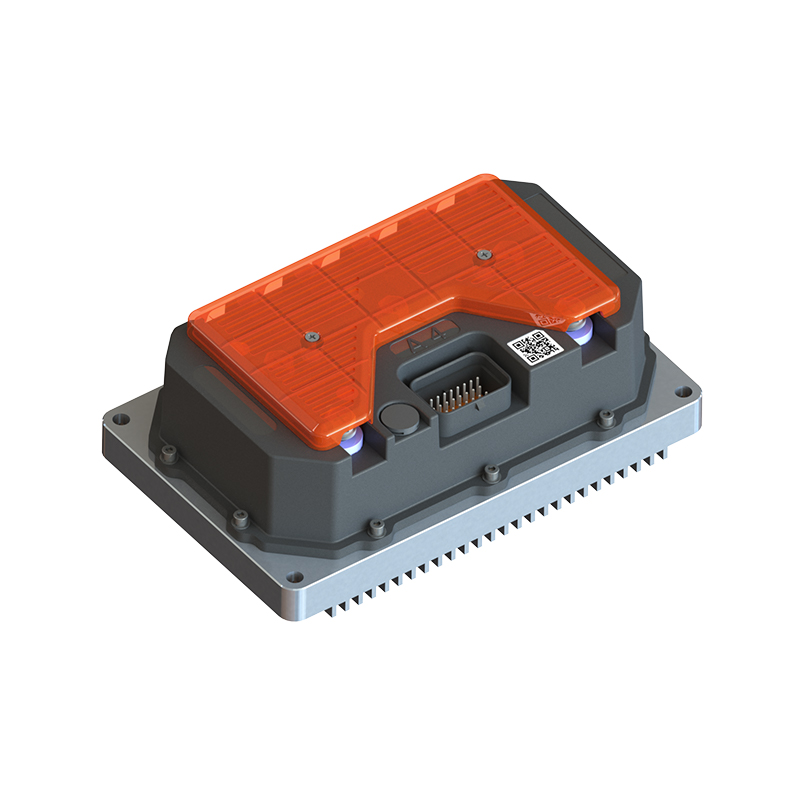
The Startup Problem: Getting from Zero to Running
BEMF is proportional to rotor speed. At standstill and very low speeds, BEMF is too weak to detect reliably—which means any BEMF-based sensorless controller has a fundamental startup challenge. The rotor position is unknown, and attempting to commutate without position information risks the motor lurching backward, stalling, or drawing excessive current.
Controllers handle this with a two-phase startup strategy. First, a controlled open-loop ramp: the controller applies a rotating magnetic field at a slow, predetermined frequency, forcing the rotor to align with and follow it—essentially dragging the motor up to a minimum speed where BEMF becomes detectable. Once sufficient BEMF is present, the controller transitions to closed-loop sensorless operation. The quality of this transition determines how smooth startup feels and how reliably the motor pulls into synchronization under load.
Advanced sensorless controllers add initial rotor position detection (IPD) or pulse injection techniques that can determine rotor orientation at standstill from inductance asymmetry, enabling a more targeted startup sequence and reducing the open-loop ramp time. The A8-2209 high-stability brushless DC motor controller incorporates enhanced startup algorithms designed for reliable cold-start performance even under loaded conditions.
Sensorless vs. Hall-Effect Sensored: Choosing the Right Architecture
Neither architecture is universally superior—the correct choice depends on the application's speed range, load profile, and cost constraints.
| Criteria | Sensorless | Hall-Effect Sensored |
|---|---|---|
| Motor cost & complexity | Lower — no sensor wiring | Higher — 3 sensors + wiring harness |
| Low-speed / standstill performance | Limited (BEMF too weak) | Excellent — Hall sensors work at 0 RPM |
| High-speed operation | Excellent | Good (limited by Hall sensor bandwidth) |
| Torque smoothness | Excellent (with FOC) | Good (dependent on sensor placement accuracy) |
| Environmental robustness | High — no sensor to fail | Moderate — sensors susceptible to heat/vibration |
| Controller complexity | Higher (estimation algorithms) | Lower (direct position feedback) |
Sensorless controllers are the preferred choice for fans, pumps, compressors, e-bikes, power tools, and any application where the motor operates primarily at mid-to-high speeds and the additional wiring of Hall sensors adds cost or reliability risk. Sensored controllers remain the better option for applications requiring startup torque under full load, very slow speed operation, or precise position control from rest—such as direct-drive lifting mechanisms or servo-style positioning axes.
The R2-2319 high-compatibility brushless DC motor controller supports both sensorless and Hall-effect sensored operation, giving designers flexibility to match the control architecture to the motor and application without changing controller hardware.
Where Sensorless Brushless Controllers Deliver the Most Value
Sensorless control is particularly well-suited to a set of application types that share common characteristics: continuous operation at moderate to high speeds, environments where sensor reliability is a concern, and cost pressures that favor simpler motor construction.
- E-bikes and light electric vehicles: Mid-drive and hub motor systems benefit enormously from sensorless FOC. Smooth, quiet torque delivery at variable assist levels is exactly what this control architecture provides, and eliminating Hall sensor wiring reduces failure modes in a product expected to operate reliably in rain, vibration, and temperature extremes.
- HVAC and refrigeration compressors: Variable-speed compressor drives run continuously at defined speed setpoints with no need for standstill torque. Sensorless control handles this efficiently while allowing speed modulation for capacity control and energy savings.
- Industrial fans and pumps: These centrifugal loads have favorable torque-speed curves—low startup torque, rising with speed—that make sensorless startup straightforward. Energy savings from variable speed operation are substantial; a 20% reduction in fan speed typically cuts power consumption by roughly 50% due to the cube law relationship between speed and power.
- Power tools and garden equipment: High-speed operation, compact motor packaging, and cost sensitivity all favor sensorless designs. The absence of sensor wiring also simplifies motor manufacturing and reduces ingress points for dust and moisture.
- Robotics and AGVs at cruise speed: Joint actuators and mobile platform drive wheels that spend most of their time at running speed benefit from sensorless FOC's efficiency and torque smoothness, though startup or homing sequences may require sensored assistance or open-loop positioning.
For a broader view of how software-defined control algorithms are transforming brushless motor drive performance across these applications, see our industry analysis on the role of software in modern motor controllers.
What to Look for When Selecting a Sensorless Brushless Motor Controller
Choosing a sensorless controller involves more than matching voltage and current ratings. Five parameters deserve close attention:
- Control algorithm quality: BEMF zero-crossing is adequate for constant-speed loads. For variable speed, smooth torque, or low-noise requirements, specify a controller with sinusoidal FOC. The algorithm implementation—not just the hardware—determines system performance.
- Startup capability under load: Confirm that the controller's startup sequence can reliably pull the motor into synchronization under your actual load inertia and startup torque requirements. Test at minimum supply voltage and maximum load to find the margin.
- Speed range: Every sensorless controller has a minimum operating speed below which BEMF detection becomes unreliable. Verify this lower limit against your application's minimum required speed, including any low-speed crawl or positioning requirements.
- Auto-tuning and parameter identification: High-quality sensorless controllers can identify motor parameters (resistance, inductance, flux linkage) automatically. This simplifies commissioning and ensures the estimation algorithm is correctly calibrated for the specific motor being driven.
- Protection features: Overcurrent, overvoltage, undervoltage, overtemperature, and stall detection are baseline requirements. Stall detection is especially important in sensorless operation—if the motor loses synchronization, the controller must recognize this quickly and restart cleanly rather than continuing to apply torque into a stalled rotor.
Our controller and motor pairing guide provides specific recommendations for matching sensorless controller models to motor specifications across different application categories. For custom OEM volumes and application-specific controller requirements, our B2B motor controller program covers engineering support from specification through production validation.
NEXT:Electromagnetic Induction Motors & AC Motors: How They Work
Interested in cooperation or have questions?
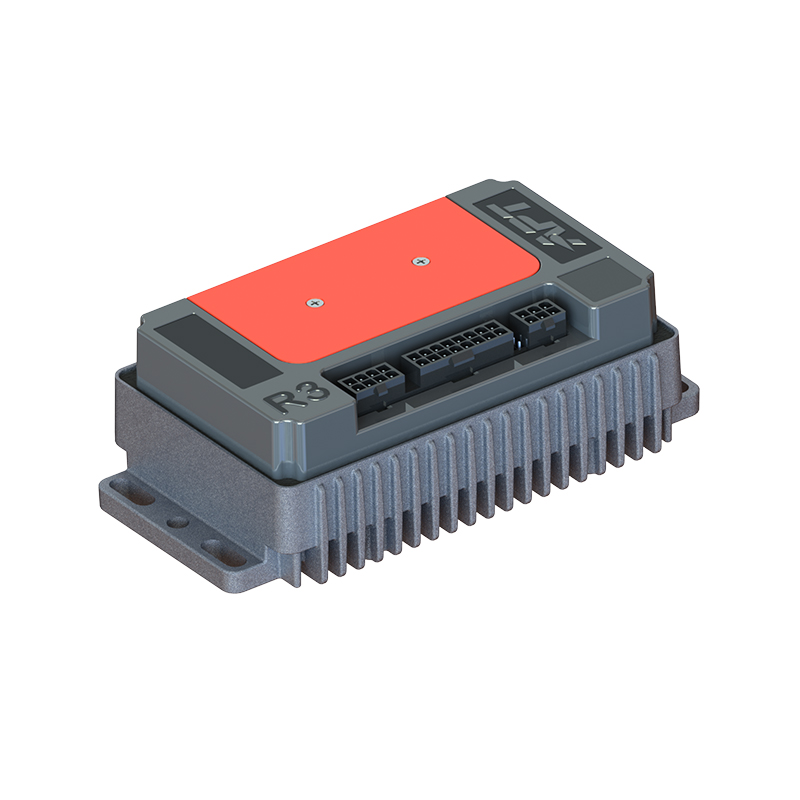
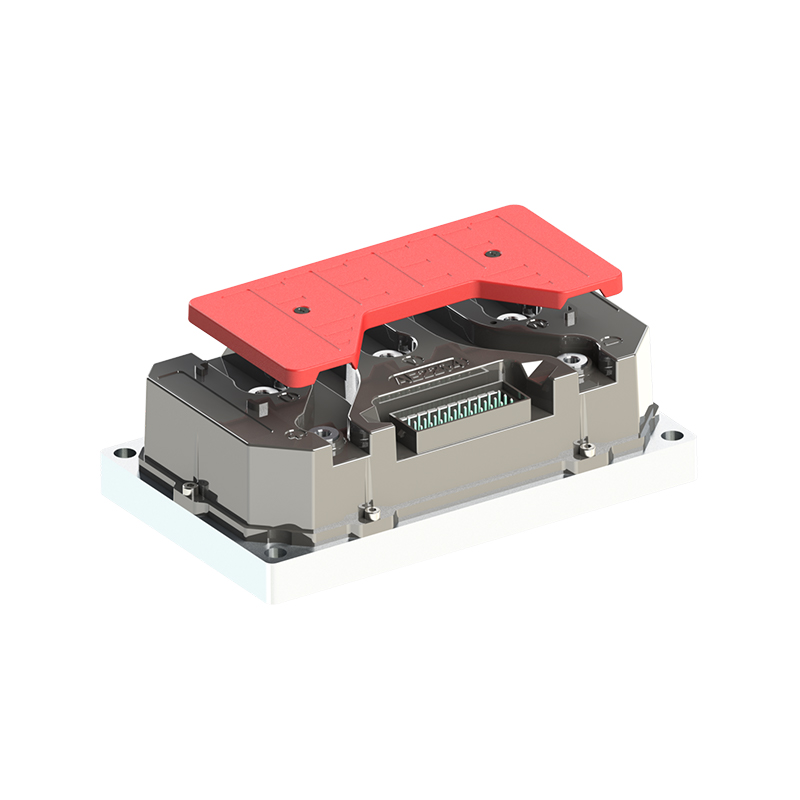
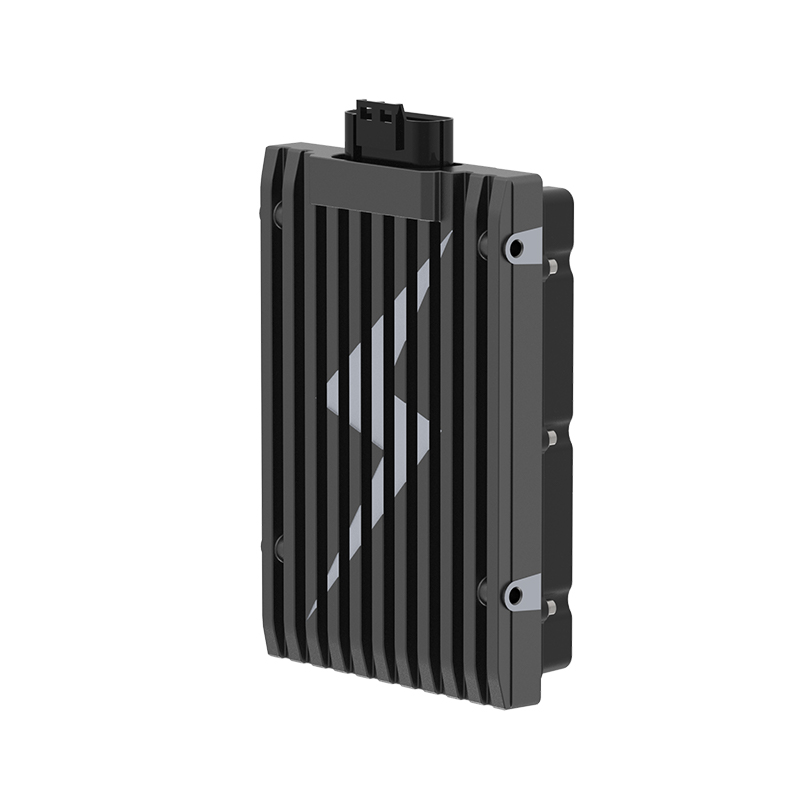
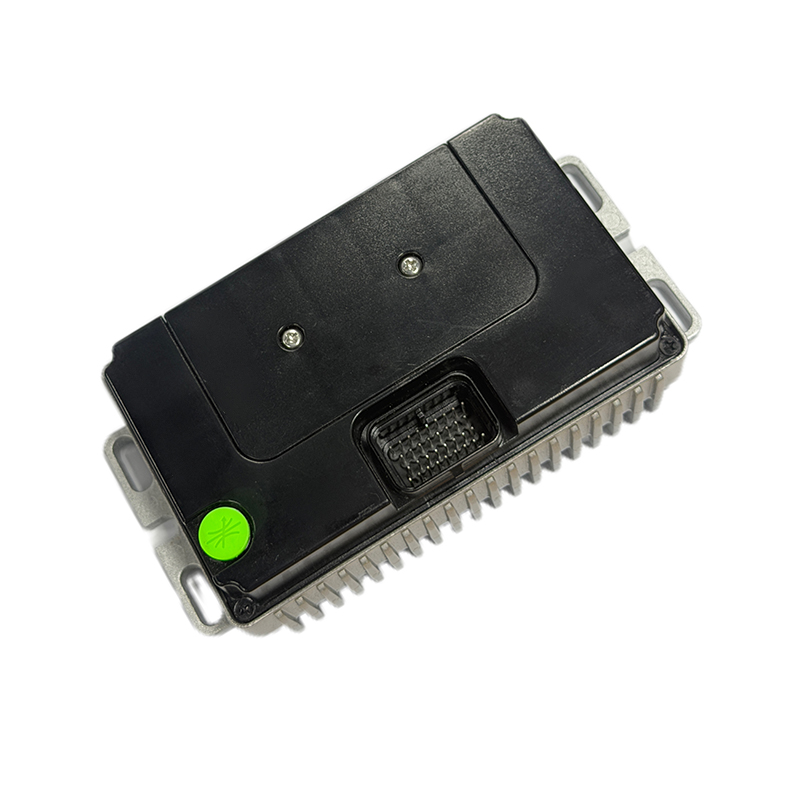

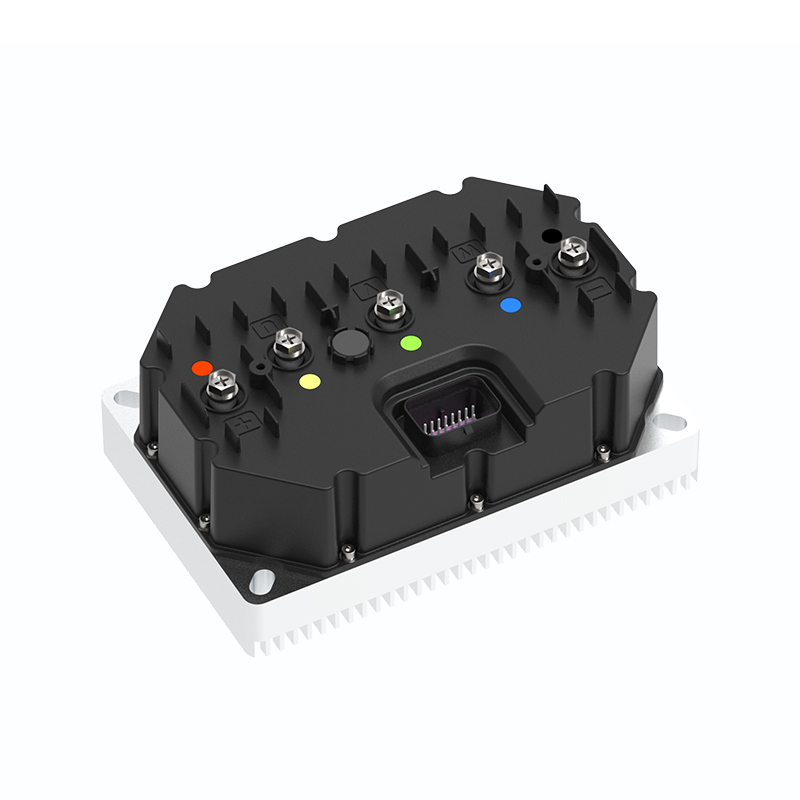

As Custom Permanent Magnet Synchronous Motor Controllers Manufacturers and Permanent Magnet Motor Controllers Suppliers in China, Focusing on the drive control of permanent magnet synchronous motors, we provide a safe and sufficient power source for the electrification of travel vehicles.
- [email protected]
- +86-170 9191 9800
- Room 123A, No. 1000 Ziyue Road, Minhang District, Shanghai, China
Copyright © Shanghai APT Power Technology Co., Ltd.All rights reserved

